
Author Archives: D P

CPAP in Summer: How to Stay Comfortable in Hot Weather

Woman looking overheated illustrating summer CPAP comfort tips
CPAP Summer Comfort

CPAP in Summer

How to stay comfortable in hot weather, reduce sweating, manage humidity and keep your therapy stable.

For many CPAP users, therapy feels easy during most of the year, but summer can make things more difficult. Warmer nights, higher humidity, sweating, air conditioning and full face masks can all affect comfort.

Hot AirWarm or heavy airflow
SweatingMask slipping and friction
Full Face MasksMore contact with skin
HumidityToo much or too little
RainoutWater in tube or mask

Important: Do not stop CPAP therapy because summer feels uncomfortable. In most cases, small changes to humidity, tube temperature, mask fit or cleaning routine can make therapy much easier.

Adjust humidity

Lower the humidifier gradually if the air feels too warm or wet.

Check tube heat

If you use a heated tube, review the tube temperature during hot nights.

Clean cushion

Sweat and facial oils can make the mask slide and cause leaks.

Try liners

A mask liner can reduce friction, sweating and skin irritation.

Why CPAP can feel less comfortable in summer

CPAP therapy delivers a constant flow of air through your mask. During hot weather, this air can feel warmer or heavier, especially if your bedroom is already warm or humid. If you use a humidifier or heated tube, the sensation may become more noticeable.

At the same time, the mask sits directly on your skin. When you sweat, the cushion may start to move, the seal may become weaker, and air leaks can appear. This can make the mask feel noisy, unstable or uncomfortable during the night.

Simple idea: summer CPAP comfort is usually about balance — enough humidity to avoid dryness, but not so much heat and moisture that therapy feels heavy.

Common summer CPAP problems

These are the issues CPAP users often notice during warmer months.

Air feels too warm

High room temperature, humidifier settings or heated tubing can make the airflow feel warmer than usual.

Mask sweating

Sweat under the cushion can make the mask slide, create friction and reduce the seal.

Noisy leaks

When the cushion moves during sleep, air can escape and make the mask noisy or unstable.

Dry mouth

Turning humidity too low can cause dry mouth, throat irritation or nasal dryness.

Rainout

Air conditioning can cool the tube while humidity stays high, causing water droplets inside the tube or mask.

Mask choice matters

A lighter mask style may feel cooler, but the right choice depends on breathing habits and leak control.

Hot air from CPAP: what can cause it?

If the air from your CPAP feels too warm in summer, the cause is often related to room temperature, humidity settings or heated tubing. In some cases, the machine is not the problem. The room is simply warm, and the air passing through the system feels less refreshing.

Things that may make CPAP air feel hotter

  • A high humidifier setting.
  • A heated tube set too warm.
  • A warm bedroom without enough ventilation.
  • The CPAP machine placed near a heat source.
  • Using a full face mask that traps more warmth around the face.
  • High outdoor humidity during the night.
If your device has automatic climate control, this is usually the best place to start. If you use manual settings, try lowering the tube temperature or humidity level gradually until the air feels more comfortable.

Should you turn off the humidifier in summer?

Some CPAP users reduce or turn off their humidifier during summer. This can help if the air feels too warm or if condensation appears in the tube or mask. However, turning the humidifier off completely is not always the best solution.

During the summer months, some users may not need the humidifier or heated tube at all, especially in naturally warm or humid climates. If your room already has enough humidity and you do not wake up with dryness, you may be able to use a lower humidifier setting, turn the humidifier off, or use the device with standard tubing instead of heated tubing.

If the humidity is too low, you may wake up with dry mouth, dry or irritated nose, sore throat, nasal congestion or more mouth breathing during sleep.

Better approach: Adjust the humidifier step by step. For example, if you normally use humidity level 4, try 3 or 2 for a few nights and check how you feel.

Summer comfort tip: humidification is for comfort, not a fixed rule for every user. If the air feels too warm or heavy, reduce humidity gradually and check how your nose, mouth and throat feel in the morning.

Full face masks can feel warmer in summer

Full face CPAP masks are very useful for people who breathe through the mouth, have nasal blockage or need a more stable therapy setup. But during summer, they can feel warmer because they cover a larger area of the face.

More contact with the skin means more trapped heat, more sweating and sometimes more leaks. When sweat builds up under the cushion, the mask may slide slightly during sleep. Many users then tighten the headgear too much, which can cause red marks, pressure points and even more discomfort.

If you use a full face mask

  • Wash your face before bed to remove oils and sweat.
  • Clean the mask cushion daily with mild soap or CPAP mask wipes.
  • Do not overtighten the headgear.
  • Replace old cushions that have become soft, oily, cracked or unstable.
  • Try a mask liner to reduce sweat and friction.
  • Consider a lighter full face or under-the-nose full face mask if suitable.

CPAP mask sweating and leaks

Sweating under the mask is one of the most common summer complaints. It can make the mask feel sticky, cause irritation and reduce the seal. When the seal becomes weaker, air escapes from the mask instead of going where it should.

Noisy air leaks

Small leaks can become louder when the cushion moves because of sweat.

Dry eyes

Air escaping toward the eyes can cause dryness or irritation.

Dry mouth

Leaks and mouth breathing can make dry mouth worse during the night.

To reduce sweating and leaks, keep the cushion clean and dry before use. Avoid heavy face creams before bedtime, as they can make the cushion slip.

Water in the tube or mask: summer rainout

Rainout happens when humidified air cools inside the tube and turns into water droplets. Many people think this only happens in winter, but it can also happen in summer, especially when air conditioning cools the bedroom while the humidifier remains set high.

Signs of rainout

  • Water droplets inside the mask.
  • Gurgling sounds in the tube.
  • A damp face during the night.
  • Sudden air blockage or uncomfortable airflow.
To reduce rainout, try lowering the humidity setting, using automatic climate control or using a heated tube designed for your CPAP machine. If the air feels too warm, a standard tube and lower humidity may be more comfortable.

Can a different mask help in summer?

Yes, in some cases. If you do not breathe through your mouth during sleep, a nasal mask or nasal pillows mask may feel lighter and cooler than a full face mask. These masks cover less of the face and may reduce sweating during hot nights.

However, if you are a mouth breather or often wake up with dry mouth, a full face mask may still be the better option. The best mask is not always the smallest one. The best mask is the one that gives you stable therapy, low leaks and enough comfort to use it every night.

Recommended CPAP products for summer comfort

The right accessory can make summer CPAP therapy much easier. These products are especially useful if you feel hot air, sweat under the mask, experience leaks, or wake up with water in the tube or mask.

Heated tubes

A heated tube is useful mainly if you experience condensation or rainout, especially with air conditioning. If the air already feels too warm, you may not need heated tubing during summer.

Mask liners

Fabric liners create a soft layer between the cushion and skin, helping reduce sweat, friction, red marks and mask slipping.

Mask wipes

Daily cushion cleaning is more important in summer. CPAP mask wipes help remove facial oils, sweat and residue that can cause leaks.

Memory foam cushions

For some full face users, a memory foam cushion such as AirTouch F20 may feel softer on the skin and reduce pressure marks.

Nasal masks

If you do not breathe through your mouth during sleep, a nasal mask may feel lighter and cooler than a full face mask.

Climate control setup

For compatible ResMed devices, Climate Control can help balance humidity and tube temperature. In warm or humid weather, lower settings or standard tubing may feel more comfortable.

Summer CPAP comfort checklist

Quick setup tips

  • Keep the bedroom cool, but avoid direct air conditioning on the CPAP tube.
  • Lower humidity gradually if the air feels too warm or too wet.
  • Use automatic climate control if your machine supports it.
  • Use standard tubing if heated tubing feels too warm and you do not have rainout.
  • Clean the mask cushion daily during hot weather.
  • Replace old cushions and headgear when the seal becomes unstable.
  • Try a mask liner if you sweat under the mask.
  • Use a heated tube only if you experience condensation or rainout.
  • Do not overtighten the mask to fix leaks.
  • Drink enough water during the day to reduce dryness.
  • Ask for support if leaks, dryness or discomfort continue.

Final thoughts

Summer can make CPAP therapy feel more challenging, but it should not make therapy impossible. Hot air, sweating, leaks, rainout and dry mouth are common problems, and most of them can be improved with the right adjustments.

If your CPAP feels uncomfortable during warm weather, start with small changes: adjust humidity, check tube temperature, clean the cushion more often and make sure your mask is not too tight. If the problem continues, it may be time to replace worn parts or consider a different mask style for better comfort.

At CPAPstore.eu, we help CPAP users find the right setup for real everyday use, not just for the first night. If you are not sure which mask, tube, cushion or accessory is right for your summer therapy, our team can help you choose the most comfortable option for your device and sleeping habits.

FAQ: CPAP comfort in summer

Why does my CPAP air feel hot in summer?

CPAP air may feel hot because of warm room temperature, high humidity settings, heated tubing or a mask that traps heat around the face. Lowering humidity or tube temperature may help.

Should I turn off my CPAP humidifier during summer?

You can reduce the humidifier setting if the air feels too warm or wet, but turning it off completely may cause dry mouth, nasal dryness or throat irritation. Some users in warm or humid climates may not need humidification every night.

Do I need a heated tube in summer?

Not always. A heated tube is helpful if you experience condensation or rainout, especially when using air conditioning. If the air feels too warm and you do not have water in the tube or mask, standard tubing may feel more comfortable.

Why does my full face CPAP mask make me sweat?

Full face masks cover a larger area of the face, which can trap heat and moisture. Sweat can also reduce the mask seal and cause leaks. Cleaning the cushion, using a liner and avoiding overtightening can help.

How do I stop CPAP mask leaks when I sweat?

Clean your face and cushion before bed, avoid oily creams, replace worn cushions and adjust the headgear gently. A mask liner may also help absorb sweat and improve comfort.

Why do I get water in my CPAP tube or mask?

This is called rainout. It happens when humidified air cools inside the tube and turns into water droplets. Lower humidity, automatic climate control or a heated tube can help reduce it.

Is a nasal mask better for summer?

A nasal mask or nasal pillows mask may feel cooler because it covers less of the face. However, if you breathe through your mouth during sleep, a full face mask may still be more suitable.

Empty Water Before Moving

Woman with megaphone announcing water safety moving tip
CPAP Humidifier Safety

Empty Water Before Moving

A simple safety rule that helps prevent water damage, motor noise and warranty problems.

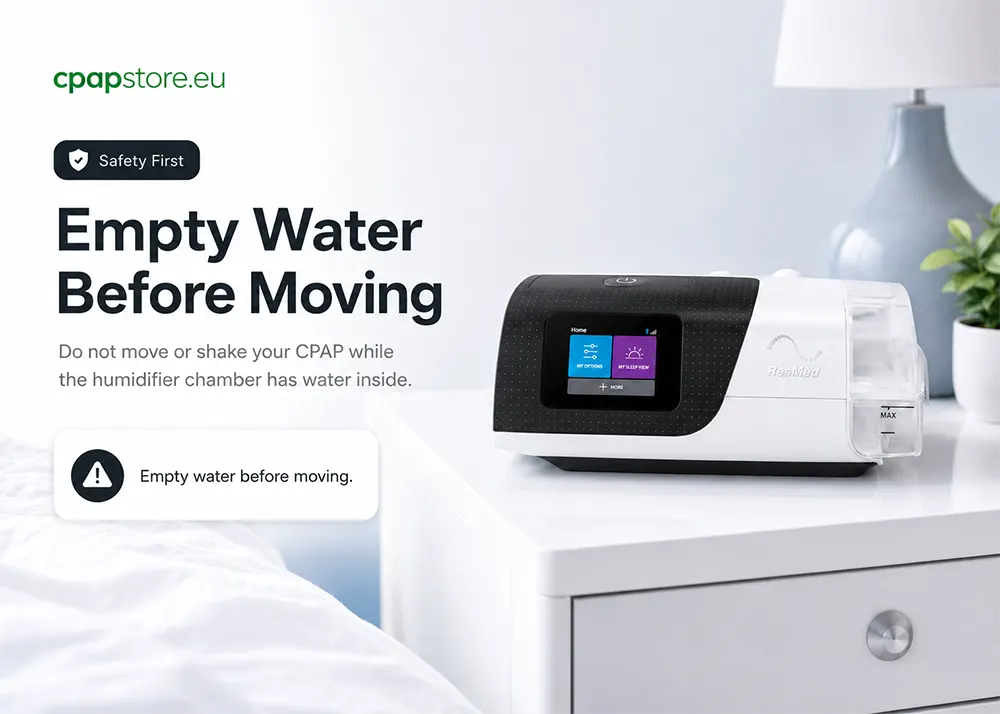
A CPAP humidifier makes therapy more comfortable, but the water chamber must be handled carefully. Never move, lift, tilt, shake or pack your CPAP machine while the humidifier chamber is attached and filled with water.

Keep It FlatStable surface during use
Fill to MAXNever overfill chamber
Empty FirstBefore moving device
Do Not ShakeAvoid liquid movement
Check NoiseStop if sound changes
Empty water from CPAP humidifier chamber before travel or moving the machine

Important: Water inside the chamber means the CPAP machine should stay still. If you need to move the machine, remove the humidifier chamber and empty the water first.

Warranty note: If water or any liquid enters the CPAP machine, the issue may be considered liquid damage, accidental damage or incorrect handling. In this case, the manufacturer warranty may not be valid for the repair.

Water chamber

Water must remain inside the chamber and never move toward the machine outlet.

Do not move

Do not lift, tilt or carry the machine while the chamber is full and attached.

Motor noise

Unusual sound after water exposure should not be ignored.

Warranty care

Liquid damage may not be covered if the machine was handled incorrectly.

The rule is very simple

Use these quick message bubbles as a customer-friendly reminder.

Do not move it full

Never carry or move the CPAP machine while the humidifier chamber is attached and filled with water.

Do not shake it

Do not shake the machine to check for water, remove water or dry it faster.

Do not pack it wet

Never place the CPAP machine in a travel bag while the water chamber still contains water.

Remove chamber first

Before moving the device, remove the humidifier chamber from the machine.

Empty all water

Pour out all remaining water and dry the outside of the chamber before transport.

Stop if noisy

If the machine starts making unusual motor noise after water exposure, stop using it and contact support.

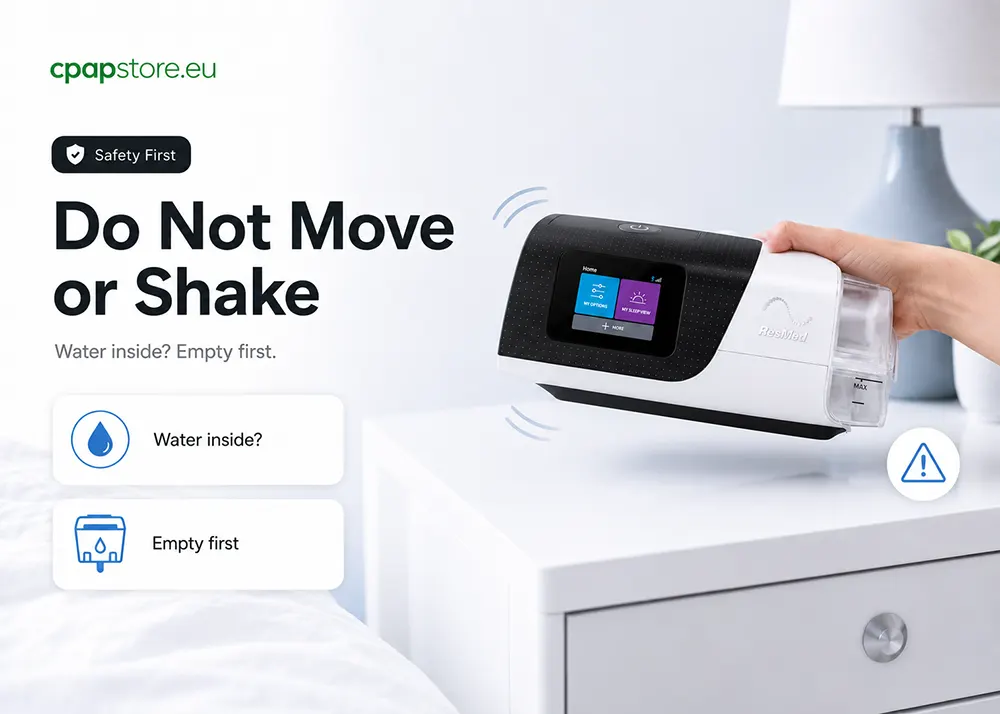
Do not move or shake your CPAP machine while the humidifier chamber is filled with water

Why this matters

When the humidifier chamber is attached and filled, the CPAP machine should remain flat and stable. If the machine is lifted, tilted or shaken, water can move inside the chamber and may reach the air outlet, tube or machine body.

This can cause water in the tube or mask, bubbling sounds, louder motor noise, unstable airflow, warning messages or possible internal damage.

Simple safety habit: water inside means the machine stays still. Need to move it? Empty the water first.

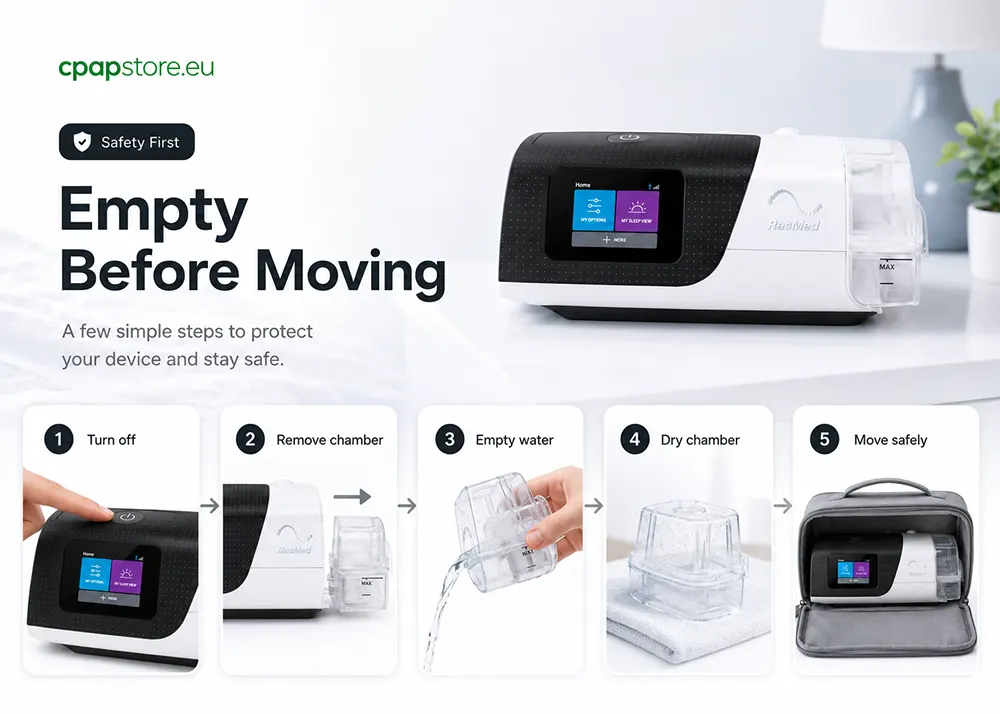
Correct way to move your CPAP machine

Moving your CPAP machine safely takes only a few seconds and can help prevent avoidable service problems.

1

Turn it off

Stop therapy and make sure the machine is no longer running.

2

Remove chamber

Take the humidifier chamber out before moving the device.

3

Empty water

Pour out all remaining water from the chamber.

4

Dry outside

Wipe the outside of the chamber if water is visible.

5

Remove tube

Disconnect the tube if you are packing or transporting the machine.

6

Move safely

Move or pack the machine only when the parts are dry and safe.

Step by step guide on how to safely prepare your CPAP machine before moving it

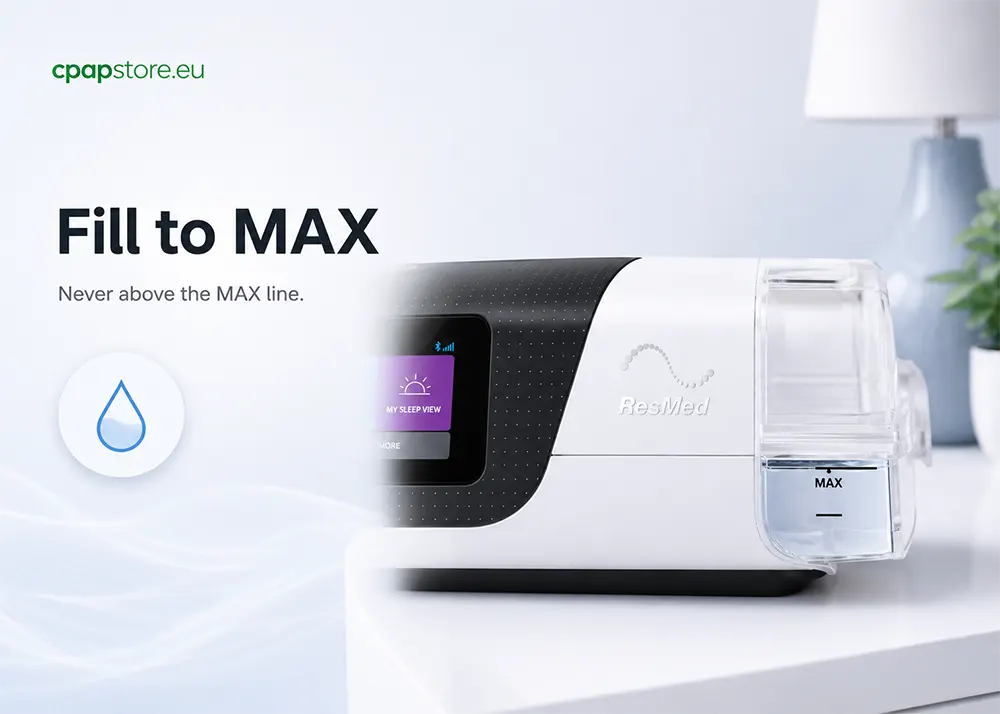
Fill only to the MAX line

Never overfill the humidifier chamber. The MAX line helps prevent water from moving into the wrong area. Adding extra water “just to last longer” increases the risk of water entering the tube or machine.

Before sleep

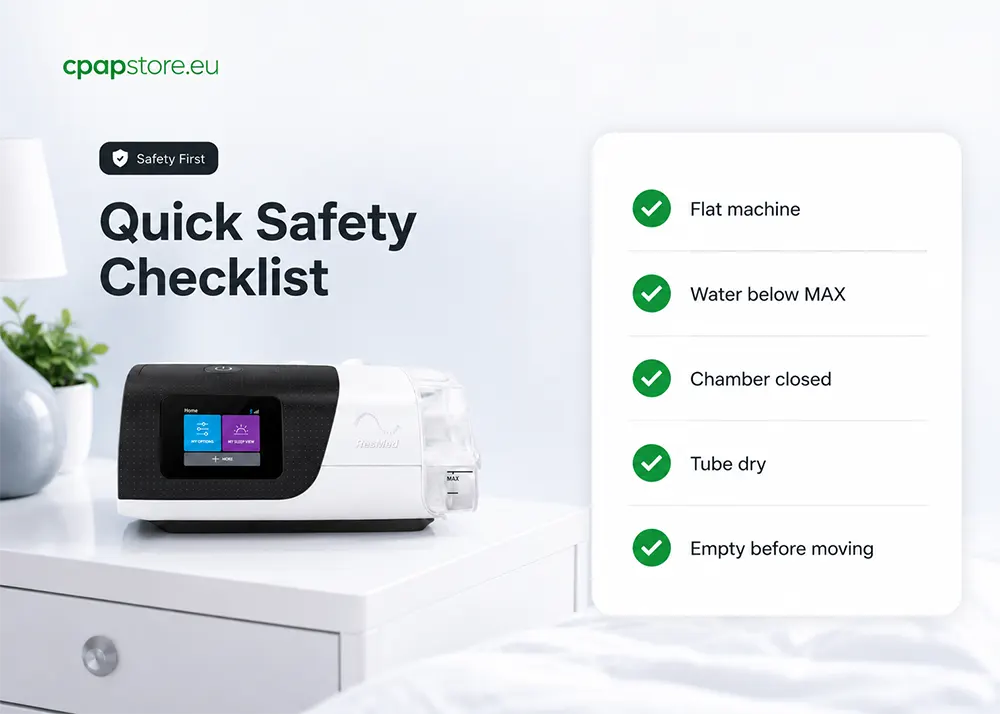
  • Fill only up to the MAX line.
  • Keep the machine flat.
  • Check that the chamber is closed correctly.
  • Make sure the tube is dry.
  • Use a stable bedside table.
  • Do not move the machine after filling.
Fill CPAP humidifier water chamber only up to the MAX line to avoid water damage

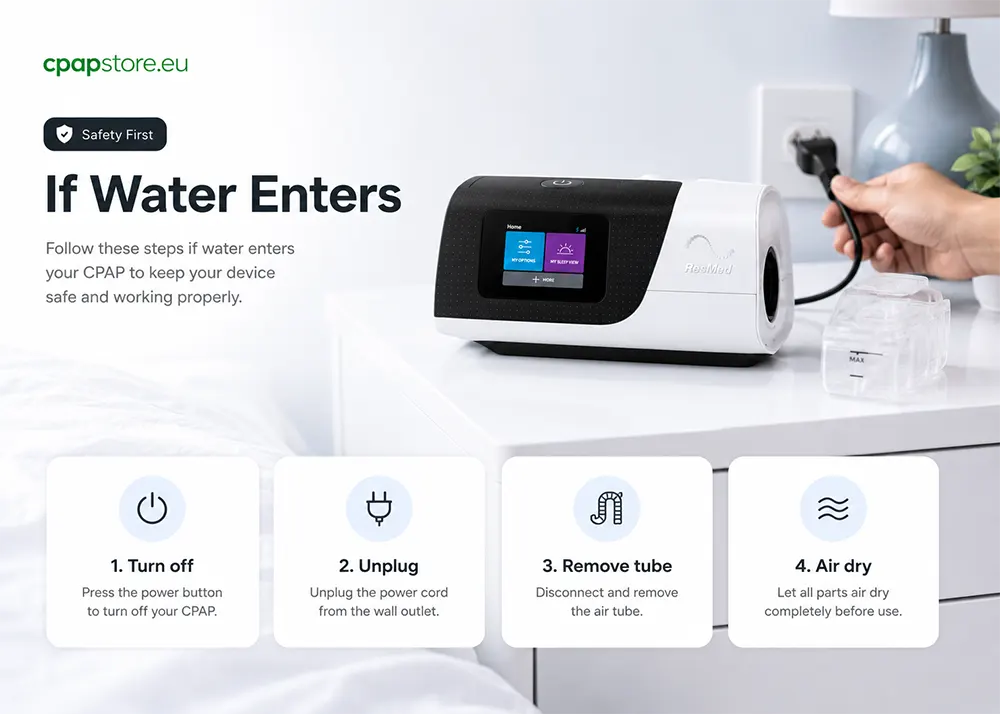
If water enters the machine

If you think water has entered your CPAP machine, stop using it. Do not shake the device, do not open it yourself and do not use a hair dryer.

Warranty warning: Water or liquid damage may not be covered by the manufacturer warranty and may require paid inspection or repair.

What to do

  • Turn the machine off immediately.
  • Unplug the power supply.
  • Remove the humidifier chamber.
  • Remove the air tube.
  • Let parts dry completely.
  • Contact support if the sound changes.
What to do if water enters your CPAP machine - unplug, remove chamber and let it dry

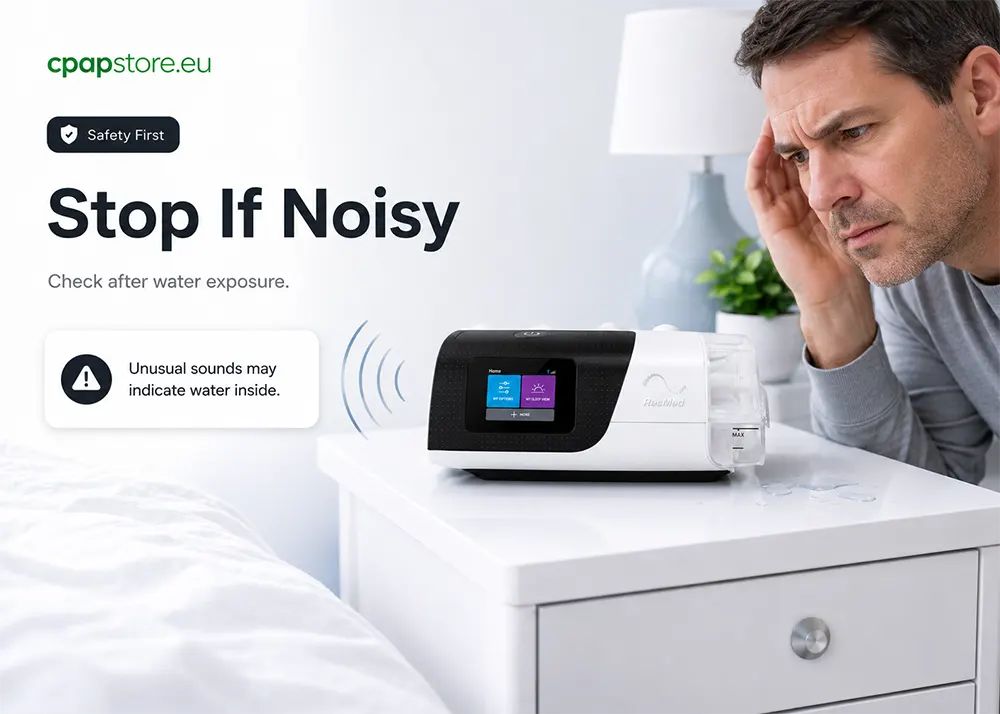
Unusual motor noise after water exposure

A CPAP machine should not suddenly become louder after water exposure. Stop and check the device if you notice unusual sounds or performance changes.

Warning signs

  • Loud motor sound.
  • Buzzing or rattling.
  • Bubbling noise.
  • Weak or unstable airflow.
  • Water inside the tube.
  • Warning messages on the screen.
Stop using your CPAP machine immediately if you hear unusual motor noise after water exposure

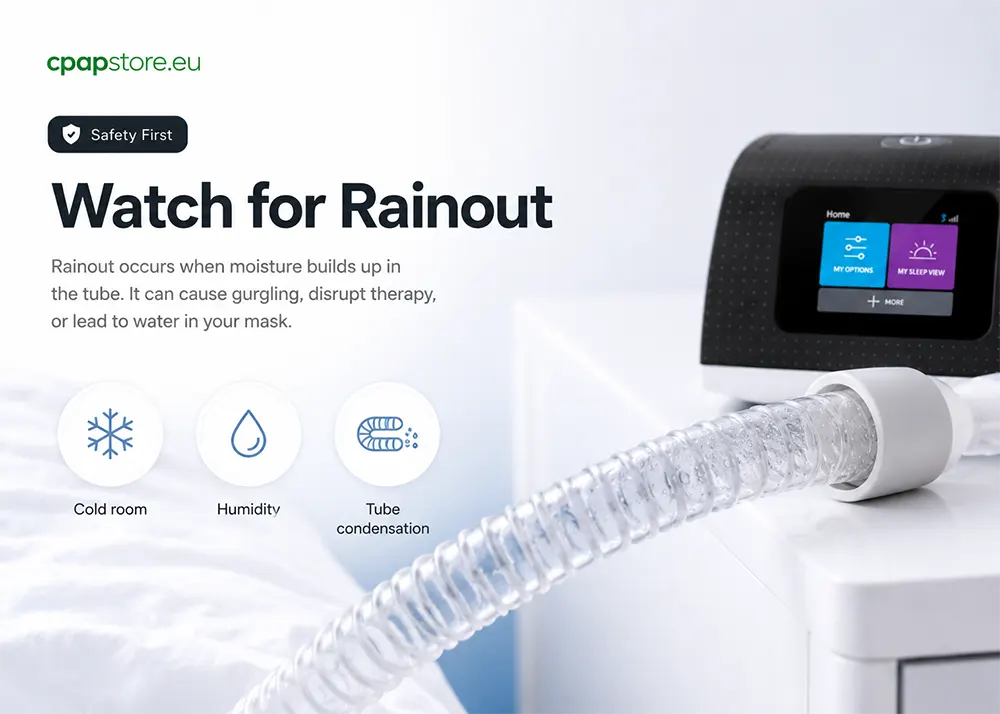
Rainout can also create water in the tube

Rainout means water condensation inside the CPAP tube or mask. It usually happens when warm humidified air meets a colder room or cold tube.

To reduce rainout

  • Use a heated tube if available.
  • Lower the humidity setting slightly.
  • Keep the room temperature stable.
  • Avoid placing the tube on a cold floor.
  • Use a CPAP tube cover if needed.
  • Check the tube for water drops in the morning.
Watch for CPAP rainout - water condensation inside the tube caused by temperature differences

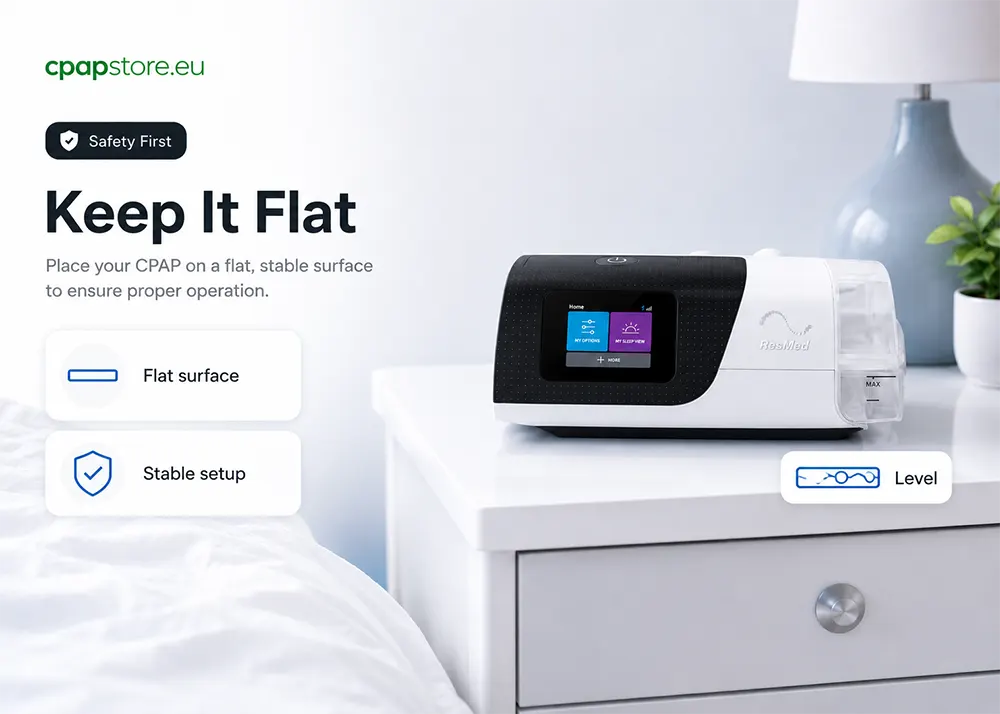
Always keep your CPAP machine on a flat, stable surface

Placing the CPAP machine on an uneven or sloped surface during use increases the risk of water moving inside the humidifier chamber and reaching the air outlet. A stable, flat bedside table is the safest setup.

Good placement habits

  • Use a flat, level bedside table.
  • Keep the machine lower than the mask if possible.
  • Avoid placing the machine on soft or uneven surfaces.
  • Do not rest the machine on its side or at an angle.
  • Make sure cables are not pulling the device.
  • Check the position again after filling with water.
Keep your CPAP machine flat and stable on a bedside table during use to prevent water movement

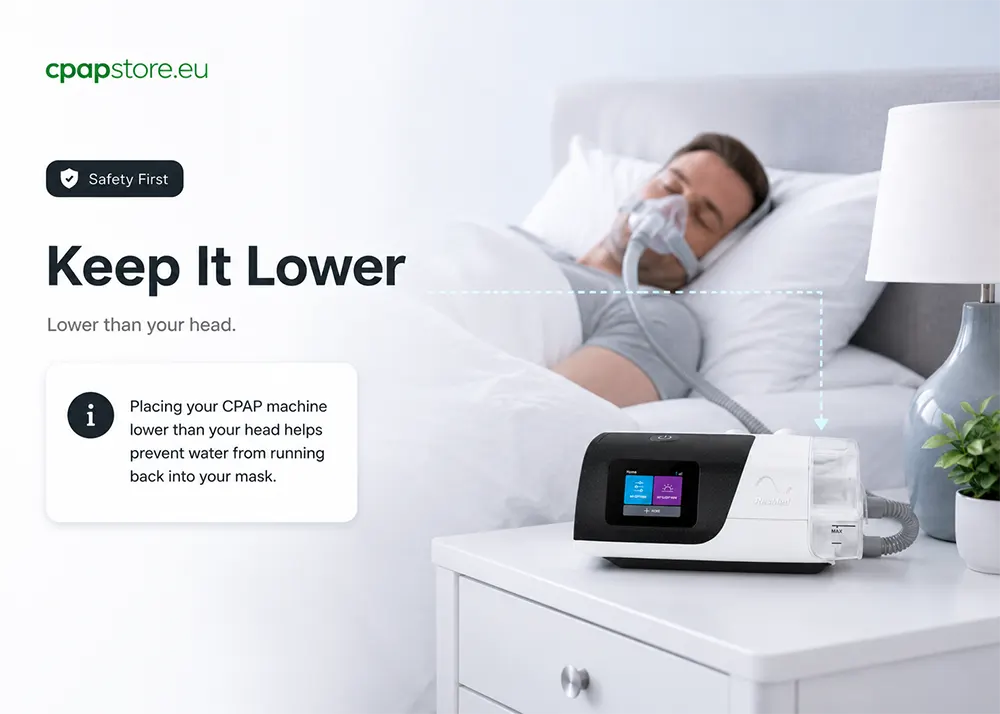
Keep the machine lower than your mask

Placing the CPAP machine at a lower level than your head and mask helps prevent water from travelling back through the tube toward your face. If the machine is placed too high, water from the humidifier chamber can flow the wrong way, especially during rainout or overfilling.

Simple rule: machine below, mask above. Gravity helps keep water where it belongs — in the chamber, not in the tube.

Setup tips

  • Position the machine on the floor or a low table if needed.
  • Make sure the tube runs upward toward the mask.
  • Avoid looping the tube below the machine level.
  • Use a tube clip or hanger to keep the tube elevated.
  • Check tube position if you experience water in the mask.
  • A heated tube also helps reduce condensation buildup.
Keep the CPAP machine lower than the mask so water cannot travel back through the tube

FAQ

Quick CPAP humidifier safety checklist - key rules to follow every time you use your machine

Quick answers

  • Do not move the machine with water inside.
  • Do not shake the machine to dry it.
  • Remove and empty the chamber before transport.
  • Stop using the machine if the motor sound changes.
  • Liquid damage may not be covered by warranty.
  • Contact support if you suspect water entered the device.

CPAP and Camping

Woman in sun hat pointing up next to CPAP camping tips

How to Sleep Safely Without Electricity

Camping is one of the best ways to disconnect, relax, and enjoy nature. But if you use CPAP therapy, sleeping away from a normal power socket can feel stressful. The good news is that camping with CPAP is completely possible when you prepare the right power solution, pack the correct accessories, and adjust your setup for outdoor conditions.

Whether you are staying in a tent, campervan, caravan, boat, or remote cabin, the most important rule is simple: do not skip your CPAP therapy just because you are away from home. Sleep apnea symptoms can return quickly when treatment is stopped, leading to poor sleep, morning headaches, daytime fatigue, snoring, and reduced energy during your trip.

This guide explains how to use your CPAP safely while camping, how to choose a battery, how to save power, and what to pack before you leave.


Can You Use CPAP While Camping?

Yes, you can use CPAP while camping, but you need to plan your power source in advance. CPAP machines are designed for nightly use, so they need a stable and reliable power supply throughout the night.

The best camping setup depends on where you are staying:

  • Camping with access to electricity: You can use your normal CPAP power supply.
  • Camping in a caravan or campervan: You may be able to use a compatible DC/DC converter or portable power station.
  • Tent camping without electricity: You will usually need a CPAP battery or portable power station.
  • Multi-night camping trips: You may need a larger battery, solar charging, or a backup power option.

Before your trip, test your complete setup at home for at least one full night. This helps you confirm that your battery, cables, mask, tube, and machine work properly before you are away from electricity.


The Main Challenge: Power Consumption

The biggest question for CPAP camping is: how long will the battery last?

The answer depends on several factors:

  • Your CPAP pressure settings
  • Whether you use a humidifier
  • Whether you use a heated tube
  • The type and capacity of the battery
  • The machine model
  • Air leaks from the mask
  • The outside temperature
  • How many hours you sleep each night

A CPAP machine without humidification uses much less power than a machine with the humidifier and heated tube turned on. For camping, this is very important.

If you want the battery to last longer, the first thing to consider is turning off or reducing the humidifier and heated tube.


Should You Use the Humidifier While Camping?

For most battery-powered camping setups, it is better to avoid using the humidifier or heated tube unless you have a large power station.

The humidifier and heated tube are very useful at home, especially if you have dryness, nasal irritation, or mouth breathing. However, they consume much more power than the CPAP machine alone.

For camping, you can usually save battery by:

  • Turning the humidifier off
  • Turning the heated tube off
  • Using a standard non-heated tube
  • Using a mask that seals well
  • Keeping your CPAP machine protected from cold air
  • Bringing water only if your device setup needs it

If you usually depend on humidification, try one night at home without it before your trip. This will help you see whether you can sleep comfortably without humidification for a short camping period.


Best Power Options for CPAP Camping

1. CPAP Battery Pack

A CPAP battery pack is one of the most convenient options for camping. It is usually compact, travel-friendly, and designed to power CPAP devices overnight.

This is a good choice if you want:

  • A lightweight solution
  • A simple setup
  • Backup power for one night
  • A battery that is easier to pack
  • A travel-friendly option for flights and camping

For example, portable CPAP batteries such as Pilot-24 style batteries are popular for travel CPAP use because they are compact and can support CPAP therapy when standard electricity is not available.

Best for: overnight camping, short trips, travel CPAP machines, emergency backup.


2. Portable Power Station

A portable power station is larger than a CPAP battery but can provide more energy. It can also charge phones, lights, cameras, tablets, or other camping equipment.

This is a good choice if you want:

  • More power capacity
  • Multi-night camping support
  • The option to charge other devices
  • A solution for a caravan, campervan, or longer outdoor trip

When choosing a portable power station, check:

  • Battery capacity in Wh
  • AC output compatibility
  • DC output options
  • Maximum wattage
  • Charging time
  • Solar panel compatibility
  • Weight and size

Best for: longer camping trips, caravans, campervans, family camping, off-grid stays.


3. DC/DC Converter for Vehicle Use

Some CPAP machines can be powered from a vehicle battery using a compatible DC/DC converter. This can be very useful in a campervan, caravan, boat, or car-based camping setup.

For example, AirSense 10 and AirCurve 10 devices can use a compatible 24V/90W DC/DC converter from a 12V or 24V DC power source, such as a vehicle or boat battery. AirMini also has a dedicated DC/DC converter option for vehicle use.

This option is practical, but you must make sure the converter is compatible with your exact CPAP model.

Best for: campervans, caravans, boats, car camping, road trips.


How to Make Your CPAP Battery Last Longer

If you are camping without electricity, small changes can make a big difference.

Turn Off the Humidifier

This is usually the biggest power-saving step. Humidification uses extra energy to heat water.

Turn Off the Heated Tube

A heated tube also consumes extra power. For camping, a standard tube may be more efficient.

Fix Mask Leaks

Large air leaks make the CPAP machine work harder and may reduce battery performance. Before your trip, check your mask cushion, headgear, and fit.

Use the Correct Tube and Adapter

Use only compatible tubes, adapters, and power cables. Incorrect accessories can cause connection problems or unstable power.

Keep the Machine Protected

Do not place the CPAP directly on the ground. Keep it dry, stable, and protected from dust, sand, insects, and moisture.

Test Everything Before the Trip

Never test your camping CPAP setup for the first time at the campsite. Run the full setup at home for one night and check how much battery remains in the morning.


CPAP Camping Checklist

Before leaving, make sure you pack:

  • CPAP machine
  • Mask
  • Headgear
  • Tube
  • Power supply
  • Battery or portable power station
  • Correct DC/DC converter if needed
  • Charging cable
  • Spare mask cushion
  • Spare CPAP filters
  • Cleaning wipes
  • Extension cable if electricity may be available
  • Travel bag
  • Distilled or clean water if using humidification
  • Small towel or protective mat
  • Prescription or device documentation if traveling abroad
  • Backup plan in case the battery does not last

A spare mask cushion and spare filters are especially important. Camping areas can be dusty, humid, or full of pollen, and these conditions can affect both comfort and therapy quality.


Where Should You Place the CPAP Machine in a Tent?

Inside a tent, place your CPAP machine:

  • On a stable surface
  • Slightly below your head level if possible
  • Away from the tent door
  • Away from dust, sand, and wet areas
  • Away from direct condensation
  • Where the tube will not be pulled during sleep

Do not cover the air intake. Your CPAP needs open airflow to work correctly.

If the ground is cold or damp, place the device on a small table, box, or dry platform. Avoid putting it directly on soil, grass, or sand.


What About Condensation?

Condensation, also called “rainout,” can happen when warm air from the CPAP tube meets colder night air. This can cause water droplets inside the tube or mask.

To reduce condensation while camping:

  • Keep the tube inside the sleeping bag if possible
  • Place the CPAP lower than your head
  • Reduce humidifier settings
  • Avoid very cold exposure around the tube
  • Use a tube cover if needed
  • Turn off humidification if battery life is more important

If you are camping in summer, condensation may be less of a problem, but it can still happen in mountains, forests, or areas where the temperature drops at night.


Can You Use a Travel CPAP for Camping?

Yes, a travel CPAP can be a very good option for camping because it is smaller, lighter, and easier to pack.

Travel CPAP machines, such as AirMini, are designed for portability. They are easier to carry in a backpack or travel bag and can be more convenient for short trips.

However, travel CPAP machines may have some differences compared with standard home devices:

  • They may be noisier
  • They may use different masks or adapters
  • They may not offer the same humidification experience
  • They may require specific accessories
  • Battery setup must be checked carefully

A travel CPAP is ideal if you camp often, travel frequently, or want a lighter setup than your home CPAP machine.


Safety Tips for CPAP Batteries

When using a CPAP battery, always follow the manufacturer’s instructions.

Important safety tips:

  • Use only compatible chargers and cables
  • Do not expose batteries to extreme heat
  • Do not leave batteries in direct sun
  • Keep batteries dry
  • Do not use damaged batteries
  • Do not cover the battery while charging
  • Do not charge near flammable materials
  • Protect battery terminals during transport
  • Store the battery safely when not in use

If you are flying before your camping trip, lithium batteries and power banks usually need to be carried in cabin baggage, not checked luggage. Always check the airline rules before traveling, especially for larger batteries.


Should You Bring a Backup Plan?

Yes. If CPAP therapy is essential for you, always have a backup plan.

Your backup plan can include:

  • A second battery
  • A larger portable power station
  • Access to your vehicle battery with a compatible converter
  • A campsite with electricity
  • Solar charging during the day
  • A nearby accommodation option if needed

For one-night camping, a single battery may be enough. For two or more nights, you should plan how the battery will be recharged.


CPAP Camping: Common Mistakes to Avoid

Mistake 1: Using the Humidifier Without Checking Battery Life

Humidification can dramatically reduce battery runtime. Test it before the trip.

Mistake 2: Taking the Wrong Cable

Many CPAP machines require specific power cables or converters. Always check compatibility.

Mistake 3: Not Testing the Setup at Home

A battery that looks strong on paper may not last all night with your pressure settings and accessories.

Mistake 4: Forgetting Spare Filters

Camping environments can be dusty. Spare filters are small, light, and very useful.

Mistake 5: Placing the CPAP on the Ground

Dust, insects, moisture, and unstable surfaces can create problems. Keep the machine protected.

Mistake 6: Skipping Therapy

Skipping CPAP may affect your sleep quality, energy, mood, and safety during your trip. If you are hiking, driving, or doing outdoor activities, good sleep matters even more.


Recommended CPAP Camping Setup

For most users, a practical camping setup looks like this:

For one night:

  • CPAP machine
  • CPAP battery
  • Humidifier off
  • Heated tube off
  • Spare filter
  • Cleaning wipes

For weekend camping:

  • CPAP machine or travel CPAP
  • Larger battery or portable power station
  • Spare mask cushion
  • Spare filters
  • DC/DC converter if using a vehicle
  • Solar charging if available

For campervan or caravan trips:

  • CPAP machine
  • Compatible DC/DC converter
  • Vehicle or leisure battery
  • Backup battery
  • Standard tube
  • Extra filters and accessories

Final Thoughts

Camping with CPAP does not need to be complicated. The key is preparation.

Choose the right power source, reduce unnecessary power consumption, protect your equipment, and test everything before your trip. With the correct setup, you can enjoy nature, sleep safely, and continue your CPAP therapy without interruption.

If you are not sure which battery, converter, or travel CPAP setup is right for your machine, our team can help you choose the correct solution based on your device model, pressure settings, and travel plans.


Suggested Products for Camping with CPAP

  • Travel CPAP machines
  • CPAP batteries
  • DC/DC converters
  • CPAP filters
  • Spare mask cushions
  • CPAP cleaning wipes
  • CPAP tubes
  • Travel bags and accessories

Prepare before you travel, and your CPAP therapy can follow you almost anywhere.