Category Archives: CPAP Academy

Summer CPAP Guide

Woman pointing at Summer CPAP Guide text on green background

How to Sleep Comfortably During Hot Weather and Travel

Summer is a wonderful season for holidays, travel, longer days, and more time outdoors. However, for people using CPAP therapy, summer can also bring some extra challenges. Hot nights, sweating, air conditioning, changing humidity levels, and travelling away from home can all affect how comfortable your CPAP treatment feels.

The good news is that with a few simple preparations, you can continue your CPAP therapy comfortably throughout the summer and enjoy your holidays without unnecessary stress.

In this guide, we explain how to use your CPAP machine during hot weather, what to prepare before travelling, and which accessories can help you sleep better during the summer months.

Why CPAP Therapy Can Feel Different in Summer

Many CPAP users notice that their therapy feels different during summer. This is normal, because the environment around you changes.

During hot weather, you may sweat more during the night. This can affect the mask seal and may cause air leaks. At the same time, many people sleep with air conditioning, which can dry the air in the room and cause dryness in the nose, mouth, or throat.

Humidity can also change depending on where you are. A seaside destination may feel more humid, while an air-conditioned hotel room may feel very dry. These changes can affect your comfort, your mask fit, and your breathing during the night.

Common summer CPAP issues include:

  • Dry nose or dry mouth
  • Mask leaks due to sweating
  • Skin irritation from the mask
  • Condensation inside the tube
  • Discomfort from warm air
  • Difficulty using CPAP while travelling
  • Forgetting important CPAP parts before holidays

Most of these problems can be avoided with good preparation and small adjustments.

CPAP and Hot Weather: How to Stay Comfortable

When the temperature rises, comfort becomes very important. CPAP therapy should not feel like a burden during summer. If your mask feels uncomfortable or you wake up sweating, there are a few simple things you can try.

First, make sure your mask cushion is in good condition. A worn-out mask cushion can lose its seal more easily, especially when your skin becomes warm or oily during the night. If you have not replaced your cushion for a long time, summer is a good time to check it.

It is also important to wash your face before bedtime. Oils, creams, and sweat can make the mask move during sleep and increase leaks. A clean face and a clean mask cushion can make a big difference.

If your bedroom is very warm, try to keep the room temperature comfortable before going to sleep. A fan or air conditioning can help, but avoid placing direct airflow straight at your face, as this may cause dryness or irritation.

CPAP and Air Conditioning

Air conditioning is very useful during hot summer nights, but it can also dry the air in the room. Many CPAP users who sleep with air conditioning may notice dry nose, dry mouth, sore throat, or nasal irritation.

This does not mean that you should stop using air conditioning. It simply means that your humidifier settings may need attention.

If you feel dryness, you may need to increase the humidifier level slightly. If you feel too much moisture or notice water inside the tube, you may need to reduce the humidifier level or adjust the room temperature.

Every user is different. Some people need more humidity in summer because of air conditioning, while others need less humidity when staying in a naturally humid place.

The best approach is to make small changes and observe how you feel the next morning.

Humidifier Tips for Summer

Your CPAP humidifier can be very helpful during summer, especially if you sleep in air-conditioned rooms. It helps reduce dryness and can make breathing more comfortable.

However, humidity needs may change depending on your environment.

If you are in a dry room with air conditioning, you may need a higher humidity setting. If you are in a humid seaside area, you may need a lower setting. If you notice condensation or water inside the tube, this may mean that the humidity level is too high for the room temperature.

Useful humidifier tips for summer:

  • Check the water level before going to sleep
  • Empty and rinse the water chamber daily
  • Use distilled water when possible
  • Adjust humidity gradually, not aggressively
  • Clean the water chamber regularly
  • Replace the water chamber if it is old, damaged, or cloudy

A clean and properly adjusted humidifier can make CPAP therapy much more comfortable during hot weather.

Mask Comfort During Summer

The mask is one of the most important parts of CPAP therapy, and during summer it can become more sensitive because of sweating and heat.

If your mask starts leaking more than usual, it does not always mean that the mask is the wrong model. It may simply mean that the cushion is worn, the straps need adjustment, or your skin is more oily during hot nights.

Before tightening the mask too much, check the cushion first. Over-tightening can cause pressure marks, discomfort, and even more leaks. Most modern CPAP masks are designed to seal gently with the air pressure, not by being extremely tight.

To improve mask comfort in summer:

  • Clean the mask cushion daily
  • Wash your face before bedtime
  • Avoid heavy face creams before using CPAP
  • Replace old cushions when needed
  • Adjust the headgear gently
  • Check for leaks after lying down in your sleeping position

If your current mask feels too warm or uncomfortable, you may also consider a different mask style. Some users prefer nasal masks or nasal pillows during summer because they feel lighter on the face. However, the best mask always depends on your breathing habits, pressure settings, and whether you breathe through your mouth during sleep.

Travelling with CPAP in Summer

Many people worry about travelling with CPAP equipment, but in most cases it is simple when you prepare correctly.

Your CPAP machine is an important medical device and should travel with you safely. When flying, it is usually best to carry your CPAP machine in your hand luggage rather than placing it inside checked baggage. This helps protect the device from damage and also reduces the risk of losing it during travel.

Before leaving for your trip, check that you have all the necessary parts. Many CPAP users remember the machine but forget the power supply, mask elbow, tube, water chamber, or filters.

A simple checklist can save your holiday.

CPAP Travel Checklist

Before travelling, make sure you have:

  • CPAP machine
  • CPAP mask
  • Mask cushion in good condition
  • Headgear
  • CPAP tube
  • Power supply
  • Power cable
  • Plug adapter for your destination
  • Water chamber
  • Spare filters
  • Travel bag
  • Mask wipes or cleaning accessories
  • Spare mask cushion if available
  • Copy of your CPAP settings or prescription, if needed
  • CPAP battery, if travelling somewhere with unstable power or for camping

It is also a good idea to test your equipment before leaving. Do not wait until the first night of your holiday to discover that something is missing or damaged.

Should You Travel with a Standard CPAP or a Travel CPAP?

Many users travel with their standard CPAP machine without any problem. Modern CPAP machines are compact enough for most trips and usually come with a travel bag.

However, if you travel often, a travel CPAP machine may be more convenient. Travel CPAP devices are smaller, lighter, and easier to pack. They are especially useful for frequent flyers, business travellers, campers, and people who want to reduce luggage size.

A travel CPAP can be a good option if you:

  • Travel several times per year
  • Want a smaller machine for holidays
  • Need a compact device for flights
  • Prefer lighter luggage
  • Need a backup CPAP device
  • Go camping or stay in places with limited space

Before choosing a travel CPAP, always check mask compatibility, humidification options, noise level, and power supply requirements.

CPAP Batteries and Power During Summer Trips

If you are travelling to a place where power may not be stable, or if you are planning camping, sailing, or road trips, a CPAP battery can be very useful.

A CPAP battery can help you continue therapy even when electricity is not available. Battery duration depends on the CPAP model, pressure settings, humidifier use, and whether a heated tube is connected.

In general, humidifiers and heated tubes use more power. If you need to use a battery for longer, you may need to use the CPAP machine without humidification, depending on your device and setup.

Before travelling, test your battery at home with your CPAP machine. This helps you understand how long it can support your therapy and avoids surprises during your trip.

Cleaning Your CPAP Equipment During Summer

Cleaning is always important, but during summer it becomes even more important because of heat and sweating.

The mask cushion touches your skin every night. Sweat, oils, and dust can build up quickly and affect both hygiene and mask seal. Daily cleaning of the mask cushion can improve comfort and reduce leaks.

Basic summer cleaning routine:

  • Clean the mask cushion daily
  • Empty and rinse the humidifier chamber daily
  • Let parts air dry away from direct sunlight
  • Replace filters regularly
  • Keep the machine away from dust, sand, and direct heat
  • Do not leave the CPAP machine inside a hot car for long periods

If you are travelling to the beach, be careful with sand and humidity. Keep your CPAP equipment inside its travel bag when not in use.

Avoid Stopping CPAP Therapy During Holidays

Some people are tempted to stop CPAP therapy during holidays, especially for short trips. This is not recommended. Sleep apnea does not take a break during summer. If you stop using your CPAP machine, symptoms such as snoring, tiredness, morning headaches, dry mouth, poor concentration, and daytime sleepiness may return. Good sleep is very important during holidays. You want to enjoy your trip, drive safely, walk, explore, and feel rested. Continuing your CPAP therapy helps you maintain better sleep quality and better energy during your summer break.

When Should You Replace CPAP Parts Before Summer?

Before travelling, it is a good idea to check your equipment and replace parts that are old or worn.

You may need replacement parts if:

  • The mask cushion has become soft, cloudy, yellow, or damaged
  • You have more leaks than usual
  • The headgear has lost elasticity
  • The tube has small holes or damage
  • The water chamber is cloudy or cracked
  • The filters are dirty or discoloured
  • The mask feels uncomfortable even after cleaning

Replacing small parts before your trip is usually much easier than trying to find them while you are away.

Useful CPAP Accessories for Summer

Some accessories can make CPAP therapy easier during summer and travel.

Useful summer CPAP accessories include:

  • Spare mask cushions
  • CPAP filters
  • CPAP travel bag
  • Mask wipes
  • CPAP tube
  • Humidifier water chamber
  • Plug adapter
  • CPAP battery
  • Travel CPAP machine
  • Lightweight mask options
  • Cleaning accessories

Having the right accessories helps you avoid treatment interruptions and makes your therapy more comfortable.

Final Tips Before Your Summer Trip

Before leaving for your summer holiday, take a few minutes to prepare your CPAP equipment.

Check that your machine works properly. Inspect your mask, tube, filters, and water chamber. Pack everything in one place and keep your CPAP machine protected during travel. If you use a humidifier, remember that your settings may need small adjustments depending on the climate and air conditioning. If your mask leaks more during hot nights, clean the cushion and check whether it needs replacement. Most importantly, do not leave your CPAP therapy behind. With the right preparation, you can sleep comfortably, travel with confidence, and enjoy your summer holidays while continuing your treatment.

Prepare Your CPAP Therapy for Summer

At CPAPstore.eu, you can find CPAP machines, masks, travel CPAP devices, replacement parts, filters, humidifier chambers, batteries, and useful accessories for your summer travel needs. Before your next trip, make sure your CPAP equipment is complete, clean, and ready to use. Good preparation means better sleep, fewer problems, and more comfortable holidays.

CPAP Travel & Battery Guide 2026

cpap travel & battery guide 2026

Travelling with a CPAP machine in Europe is easier than many users expect. With the right preparation, you can take your CPAP device, mask, tubing, humidifier and battery with you safely by plane, ferry, train or car. This guide explains the most important things to know before travelling with your CPAP equipment in 2026.


Can You Fly with a CPAP Machine?

Yes. CPAP, APAP and BiPAP machines are generally allowed on flights because they are medical devices. The best option is to keep your CPAP machine in your hand luggage, not in your checked suitcase. This helps protect the device from damage, loss or delay. Before your flight, check with your airline if:

  • your CPAP machine can be carried as medical equipment,
  • you can use it during the flight,
  • you need to inform the airline in advance,
  • you need a medical note or prescription.

Even if CPAP machines are usually accepted, each airline may have slightly different rules.


Does CPAP Count as Cabin Baggage?

Many airlines treat CPAP machines as medical equipment, but this does not always mean it is automatically excluded from your cabin baggage allowance. To avoid problems at the airport, contact your airline before travelling and ask if your CPAP bag can be carried in addition to your normal hand luggage. It is also useful to keep your CPAP in its original travel bag and carry a copy of your prescription or medical note.


CPAP Batteries on Planes in 2026

If you travel with a CPAP battery, this is the most important part to check. Most CPAP batteries use lithium-ion technology. These batteries are usually allowed only in cabin baggage, not in checked luggage. As a general rule:

  • batteries up to 100 Wh are usually accepted in carry-on baggage,
  • batteries between 101 Wh and 160 Wh usually require airline approval,
  • batteries over 160 Wh are usually not allowed for passenger travel.

Always check the battery label before flying. Look for the Wh rating. If you cannot find it, contact the battery manufacturer or your airline before travel. If you want to use your CPAP machine during the flight, ask the airline in advance. Do not rely only on the aircraft power socket, because it may not be available or suitable for your device.


Travel CPAP or Standard CPAP?

You can travel with a standard CPAP machine, but a travel CPAP device is often easier for frequent travellers. A standard CPAP machine is usually more comfortable for daily home therapy, especially if you use a humidifier. A travel CPAP machine is smaller, lighter and easier to pack. It is ideal for holidays, business trips, short stays and frequent flights. For many users, the best solution is to keep the standard CPAP machine at home and use a compact travel CPAP device when travelling.


CPAP Travel Checklist

Before leaving home, make sure you have:

  • CPAP machine
  • CPAP mask
  • headgear
  • tubing
  • power supply
  • plug adapter
  • humidifier water chamber, if used
  • spare mask cushion
  • spare filters
  • CPAP wipes or cleaning accessories
  • CPAP battery, if needed
  • medical note or prescription, if available

Do not pack your only mask or machine in checked luggage. If your suitcase is delayed, you may not be able to continue your therapy. Download the checklist


Hotel and Holiday Tips

When you arrive at your hotel or accommodation, place your CPAP machine on a stable surface near the bed. It is useful to travel with a small extension cable, because the power socket may not be close to the bedside table. If you use a humidifier, empty the water chamber before moving the machine. Never travel with water inside the chamber. If distilled water is not available, bottled water may be used for short periods, but it may leave mineral deposits. Clean the water chamber carefully after your trip.


Useful CPAP Travel Products

For easier travel, you may consider:

  • travel CPAP machines
  • CPAP batteries
  • CPAP carry cases
  • spare mask cushions
  • spare filters
  • power supplies and adapters
  • CPAP cleaning wipes

Having a few spare parts with you can prevent small problems from becoming serious during your trip.


Final Advice

Travelling with CPAP therapy is completely possible with good preparation. The most important steps are simple: keep your CPAP machine in your hand luggage, check airline battery rules, pack spare parts and confirm in advance if you plan to use your device during the flight.

With the right setup, you can continue your sleep apnea therapy comfortably while travelling across Europe in 2026.

Blog article: https://www.cpapstore.eu/blog/cpap-travel-battery-guide-2026/

Travel CPAP category: https://www.cpapstore.eu/product-category/cpap-bipap-machines/cpap-machines/cpap-complete-packages/airmini-packages/

CPAP batteries: https://www.cpapstore.eu/product-category/cpap-accessories/power-solution/machine-batteries/

CPAP accessories: https://www.cpapstore.eu/product-category/cpap-accessories/

CPAP Mask Cleaning Guide

cpap mask cleaning guide

How to Keep Your Mask Clean, Fresh & Comfortable

If you use CPAP therapy every night, keeping your mask clean is one of the easiest ways to improve comfort, hygiene, and overall experience. A clean CPAP mask feels fresher, seals better, and helps you enjoy more comfortable therapy night after night. Many CPAP users focus on machine settings and pressure levels, but the mask is the part that touches your face for hours every night—so regular cleaning matters. In this guide, we explain the best daily and weekly CPAP mask cleaning routine, what products to use, and common mistakes to avoid.


Why CPAP Mask Cleaning Matters

Your CPAP mask can collect: Without regular cleaning, buildup may affect comfort and the quality of the mask seal.

  • Facial oils
  • Sweat
  • Skin cells
  • Dust
  • Moisture
  • Makeup or skincare residue

Keeping your mask clean can help:

  • Improve comfort
  • Maintain a better seal
  • Reduce unpleasant odors
  • Keep equipment fresh
  • Support a better nightly routine

Daily CPAP Mask Cleaning Routine (1 Minute)

The most important daily step is cleaning the mask cushion, as this is the part that sits directly on your face.

What to Do Each Morning

  1. Remove the mask if needed
  2. Wipe the cushion with CPAP mask wipes or a soft damp cloth
  3. Allow it to air dry naturally

Why Daily Cleaning Helps

Facial oils can build up quickly and make the cushion slippery, which may affect comfort during the night. A quick daily wipe can help keep your mask feeling fresh and comfortable.


Weekly Deep Cleaning Routine

Once per week, wash all removable mask parts according to the manufacturer’s instructions.

Common Parts to Clean

  • Cushion
  • Frame
  • Headgear (if washable)
  • Elbow or swivel parts
  • Short tubing if included

How to Clean

  1. Use warm water
  2. Add mild soap or baby shampoo
  3. Wash gently by hand
  4. Rinse thoroughly
  5. Leave parts to air dry away from direct sunlight

What Cleaners Should You Avoid?

To help protect your mask materials, avoid using:

  • Bleach
  • Strong detergents
  • Alcohol-based cleaners
  • Very hot water
  • Abrasive cleaning products

Gentle cleaning is always the best approach.


CPAP Headgear Cleaning Tips

Headgear straps may absorb sweat over time, so regular washing helps keep them fresh. Always check the manufacturer instructions and allow the straps to dry fully before use.


CPAP Wipes vs Soap and Water

CPAP Mask Wipes

Ideal for quick daily cleaning and travel use.

Soap and Water

Best for weekly deep cleaning of all parts.

Many CPAP users use both methods as part of their routine.


Common Cleaning Mistakes to Avoid

1. Skipping Daily Cushion Cleaning

Oil buildup can happen quickly.

2. Using Harsh Chemicals

These may damage delicate mask materials.

3. Reassembling While Wet

Allow all parts to dry properly before use.

4. Forgetting Weekly Cleaning

A weekly deeper clean helps keep everything fresh.


Simple Cleaning Routine to Follow

Every Day:

Wipe the cushion

Once Per Week:

Wash mask parts with warm water and mild soap

Always:

Let everything dry fully before use


Final Thoughts

CPAP mask cleaning does not need to be complicated. Just a few minutes each week can help keep your equipment clean, fresh, and comfortable. Good cleaning habits can make nightly therapy feel better and easier to maintain.

Half of CPAP Users Quit therapy

half of cpap users quit here’s why

Here’s Why And How You Can Succeed

It’s a shocking statistic: Nearly 50% of CPAP users stop using their therapy within the first few years.

But here’s the truth most people don’t hear: It’s NOT because CPAP doesn’t work. It’s because no one teaches you how to actually live with it.


CPAP Works — But Adaptation Is Everything

Continuous Positive Airway Pressure (CPAP) therapy is one of the most effective treatments for sleep apnea. When used correctly, it can:

  • Improve sleep quality
  • Reduce daytime fatigue
  • Lower cardiovascular risks
  • Improve overall quality of life

Yet many users struggle—not with the therapy itself—but with the experience.


Why So Many People Give Up

Let’s be honest. Starting CPAP can feel overwhelming.

Common challenges include:

  • Discomfort from the mask
  • Dry nose or throat
  • Feeling claustrophobic
  • Air leaks or noise
  • Difficulty falling asleep with the device

These are real issues—but they are all solvable. The problem? Most users are sent home with a machine… and little to no guidance.


CPAP Is Not “Plug & Play”

One of the biggest misconceptions is that CPAP works instantly without adjustment.

In reality, CPAP is more like:

  • Learning to sleep in a new environment
  • Training your body to accept airflow
  • Finding the right setup for YOUR needs

Without proper support, frustration builds—and many people quit before they experience the benefits.


The Missing Piece: Education & Support

Success with CPAP comes down to one thing: Knowing how to adapt.

That includes:

  • Choosing the right mask type and size
  • Adjusting humidity and comfort settings
  • Learning how to handle leaks
  • Creating a consistent bedtime routine
  • Understanding that adaptation takes time (not one night!)

What Successful CPAP Users Do Differently

People who stick with CPAP usually follow a different approach:

✔ They give themselves time (1–4 weeks min)
✔ They troubleshoot issues early

✔ They adjust—not abandon—the therapy
✔ They seek guidance when something feels off

Most importantly: They understand that discomfort at the beginning is normal—not permanent.


You Don’t Have to Figure It Out Alone

That’s exactly why we offer full, real human support to every customer.

Because CPAP is not just about buying a device — it’s about making it work for you.

With our support, you can:

  • Understand what to expect during the first days and weeks
  • Get practical advice to sleep comfortably with your mask
  • Solve common issues like leaks, dryness, or discomfort
  • Avoid the most common mistakes new users make
  • Stay motivated and confident during your adaptation

Real Support. Real Results.

Unlike many online stores that simply ship a product, we stay with you after the purchase.

  • Need help choosing the right mask?
  • Not sure about your settings?

Something doesn’t feel right?

We’re here to guide you step by step.


Consistency Matters More Than Perfection

One of the most important things to understand is this: Staying in therapy is more important than being perfect from day one.

Even if you don’t manage to use your CPAP for the entire night at the beginning — that’s completely normal.

What matters is that you keep using it.


Start Small. Build Up Gradually.

Adapting to CPAP is a process.

You don’t have to get it right overnight.

  • Use it for a few hours
  • Take breaks if needed
  • Put it back on when you can

Little by little, your body will adjust.

And over time, those few hours will naturally turn into a full night of comfortable sleep.


Final Thought

If you’re struggling with CPAP, don’t give up. You don’t need a new machine — you need the right guidance. And that’s exactly what we provide.

CPAP 101: Sleep Apnea Basics for Newly Diagnosed Patients

cpap 101 sleep apnea basics for newly diagnosed patients

Being diagnosed with sleep apnea can feel overwhelming. Many patients leave the clinic with a CPAP prescription but still have dozens of unanswered questions:

What is happening to my body? Will I have to use this machine forever? Will I ever sleep normally again?

The good news: sleep apnea is highly treatable — and CPAP therapy is one of the most effective treatments in modern medicine. This beginner guide explains everything you need to know in simple language.


What Is Sleep Apnea?

Sleep apnea is a condition where breathing repeatedly stops and starts during sleep. These pauses can last from a few seconds to over a minute and may happen dozens or even hundreds of times per night.

Each time breathing stops, your brain briefly wakes you to restart airflow. Most people don’t remember these awakenings — but their sleep becomes fragmented and poor in quality.

Common symptoms include:

Untreated sleep apnea increases the risk of:

  • Loud snoring
  • Gasping or choking during sleep
  • Morning headaches
  • Daytime fatigue
  • Brain fog and poor concentration
  • Irritability or mood changes
  • High blood pressure
  • Heart disease
  • Stroke
  • Diabetes
  • Memory problems

That’s why treatment is so important.

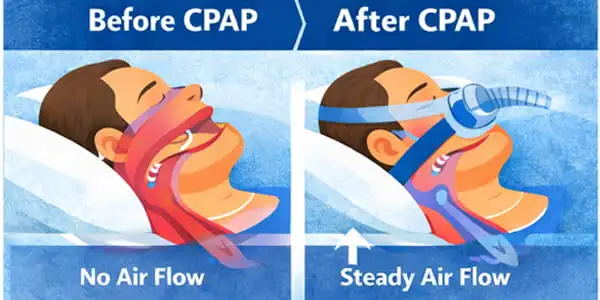
with and without cpap

What Does CPAP Mean?

CPAP stands for Continuous Positive Airway Pressure.

A CPAP machine gently pushes air through a mask to keep your airway open while you sleep. The air pressure acts like an invisible splint, preventing the throat from collapsing.

You are still breathing naturally — the machine only assists airflow.

Think of it as: Glasses for your breathing at night. It doesn’t cure sleep apnea permanently, but it controls it extremely effectively.


How CPAP Therapy Improves Your Life

Most patients notice changes within days or weeks.

Benefits of consistent CPAP use:

  • Deeper, more restorative sleep
  • Increased daytime energy
  • Better concentration and memory
  • Reduced snoring
  • Lower blood pressure
  • Improved heart health
  • Better mood and mental clarity

Many people say: “I didn’t realize how exhausted I was until I started sleeping properly again.”


What to Expect in Your First Weeks

Adjusting to CPAP is a learning process — not an overnight transformation.

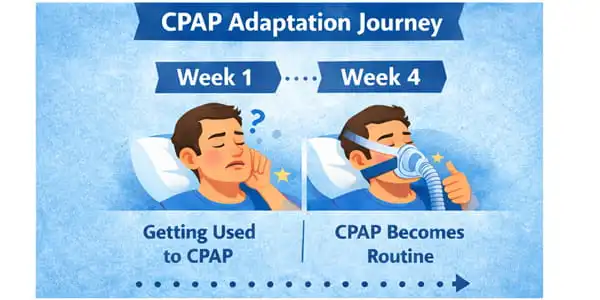
The first 2–4 weeks are about adaptation.

Normal beginner experiences:

  • Feeling strange wearing a mask
  • Mild air leaks
  • Dry mouth or nose
  • Removing the mask during sleep
  • Light sleep interruptions

These are temporary and manageable. Consistency is the key. Even wearing the mask for a few hours each night builds tolerance.

1 4 weeks of cpap

Choosing the Right CPAP Mask

Comfort determines success.

There are three main mask types:

Nasal masks

Cover the nose only
Best for: side sleepers, light breathers

Nasal pillow masks

Minimal contact with the face
Best for: active sleepers

Full face masks

Cover nose and mouth
Best for: mouth breathers

There is no universal “best” mask — only the best mask for you. Mask fit matters more than brand.


Cleaning and Maintenance Basics

Clean equipment = better health and longer machine life.

Daily:

  • Rinse mask cushion
  • Empty humidifier water

Weekly:

  • Wash mask and tubing
  • Clean humidifier chamber
  • Replace distilled water

Every few months:

  • Replace filters
  • Inspect mask cushions
  • Check tubing for wear

Regular maintenance prevents infections and keeps airflow optimal. click here for more details


Will I Need CPAP Forever?

Sleep apnea is usually a chronic condition.

Some patients improve with:

  • Weight loss
  • Surgery
  • Oral appliances
  • Lifestyle changes

But CPAP remains the gold standard treatment for moderate to severe sleep apnea. Using CPAP consistently is safer than stopping therapy prematurely. Think long-term health, not short-term inconvenience.


Tips for CPAP Success

  • Wear it every night (even naps)
  • Adjust straps gradually — not too tight
  • Use humidification if you feel dryness
  • Replace worn mask cushions
  • Track your sleep data
  • Ask for help when needed

Success is not perfection. Success is consistency.


Frequently Asked Questions

Is CPAP painful?

No. The pressure feels unusual at first, but not painful. Most people adapt quickly.

What if I feel claustrophobic?

Start by wearing the mask while awake for 10–15 minutes daily. Gradual exposure builds comfort.

Can I travel with CPAP?

Yes. CPAP machines are approved medical devices and allowed on airplanes worldwide.

Will I sleep normally again?

Yes — and often better than you have in years.


Final Thoughts

Being diagnosed with sleep apnea is not a setback. It’s the beginning of better sleep, better health, and a better quality of life. CPAP therapy works. Millions of people use it successfully every night. The first step is patience. The second step is consistency. The result is life-changing sleep.

CPAP 101: Sleep Apnea Basics for Newly Diagnosed Patients