
CPAP Academy
CPAP 101: Sleep Apnea Basics for Newly Diagnosed Patients

Feb
Being diagnosed with sleep apnea can feel overwhelming. Many patients leave the clinic with a CPAP prescription but still have dozens of unanswered questions:
What is happening to my body? Will I have to use this machine forever? Will I ever sleep normally again?
The good news: sleep apnea is highly treatable — and CPAP therapy is one of the most effective treatments in modern medicine. This beginner guide explains everything you need to know in simple language.
What Is Sleep Apnea?
Sleep apnea is a condition where breathing repeatedly stops and starts during sleep. These pauses can last from a few seconds to over a minute and may happen dozens or even hundreds of times per night.
Each time breathing stops, your brain briefly wakes you to restart airflow. Most people don’t remember these awakenings — but their sleep becomes fragmented and poor in quality.
Common symptoms include:
Untreated sleep apnea increases the risk of:
- Loud snoring
- Gasping or choking during sleep
- Morning headaches
- Daytime fatigue
- Brain fog and poor concentration
- Irritability or mood changes
- High blood pressure
- Heart disease
- Stroke
- Diabetes
- Memory problems
That’s why treatment is so important.
What Does CPAP Mean?
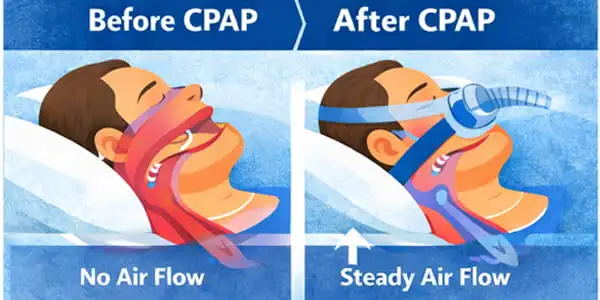
CPAP stands for Continuous Positive Airway Pressure.
A CPAP machine gently pushes air through a mask to keep your airway open while you sleep. The air pressure acts like an invisible splint, preventing the throat from collapsing.
You are still breathing naturally — the machine only assists airflow.
Think of it as: Glasses for your breathing at night. It doesn’t cure sleep apnea permanently, but it controls it extremely effectively.
How CPAP Therapy Improves Your Life
Most patients notice changes within days or weeks.
Benefits of consistent CPAP use:
- Deeper, more restorative sleep
- Increased daytime energy
- Better concentration and memory
- Reduced snoring
- Lower blood pressure
- Improved heart health
- Better mood and mental clarity
Many people say: “I didn’t realize how exhausted I was until I started sleeping properly again.”
What to Expect in Your First Weeks
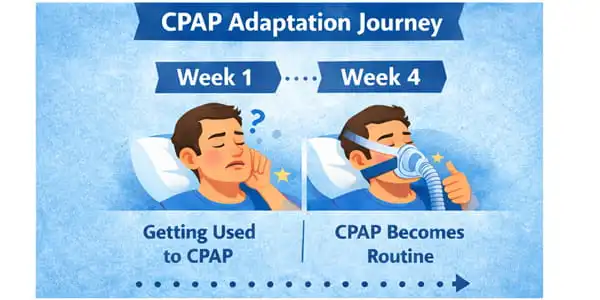
Adjusting to CPAP is a learning process — not an overnight transformation.
The first 2–4 weeks are about adaptation.
Normal beginner experiences:
- Feeling strange wearing a mask
- Mild air leaks
- Dry mouth or nose
- Removing the mask during sleep
- Light sleep interruptions
These are temporary and manageable. Consistency is the key. Even wearing the mask for a few hours each night builds tolerance.
Choosing the Right CPAP Mask
Comfort determines success.
There are three main mask types:
Nasal masks
Cover the nose only
Best for: side sleepers, light breathers
Nasal pillow masks
Minimal contact with the face
Best for: active sleepers
Full face masks
Cover nose and mouth
Best for: mouth breathers
There is no universal “best” mask — only the best mask for you. Mask fit matters more than brand.
Cleaning and Maintenance Basics
Clean equipment = better health and longer machine life.
Daily:
- Rinse mask cushion
- Empty humidifier water
Weekly:
- Wash mask and tubing
- Clean humidifier chamber
- Replace distilled water
Every few months:
- Replace filters
- Inspect mask cushions
- Check tubing for wear
Regular maintenance prevents infections and keeps airflow optimal. click here for more details
Will I Need CPAP Forever?
Sleep apnea is usually a chronic condition.
Some patients improve with:
- Weight loss
- Surgery
- Oral appliances
- Lifestyle changes
But CPAP remains the gold standard treatment for moderate to severe sleep apnea. Using CPAP consistently is safer than stopping therapy prematurely. Think long-term health, not short-term inconvenience.
Tips for CPAP Success
- Wear it every night (even naps)
- Adjust straps gradually — not too tight
- Use humidification if you feel dryness
- Replace worn mask cushions
- Track your sleep data
- Ask for help when needed
Success is not perfection. Success is consistency.
Frequently Asked Questions
Is CPAP painful?
No. The pressure feels unusual at first, but not painful. Most people adapt quickly.
What if I feel claustrophobic?
Start by wearing the mask while awake for 10–15 minutes daily. Gradual exposure builds comfort.
Can I travel with CPAP?
Yes. CPAP machines are approved medical devices and allowed on airplanes worldwide.
Will I sleep normally again?
Yes — and often better than you have in years.
Final Thoughts
Being diagnosed with sleep apnea is not a setback. It’s the beginning of better sleep, better health, and a better quality of life. CPAP therapy works. Millions of people use it successfully every night. The first step is patience. The second step is consistency. The result is life-changing sleep.
